Air conditioner repair, starting with what you can check
Most of our air conditioner repair calls come in on the first hot week of the year, when a unit that sat idle all winter is asked to work flat out. Some need a part. A surprising number need nothing more than a setting changed or a filter washed. So before you book a call-out, it's worth five minutes with the remote and the manual.
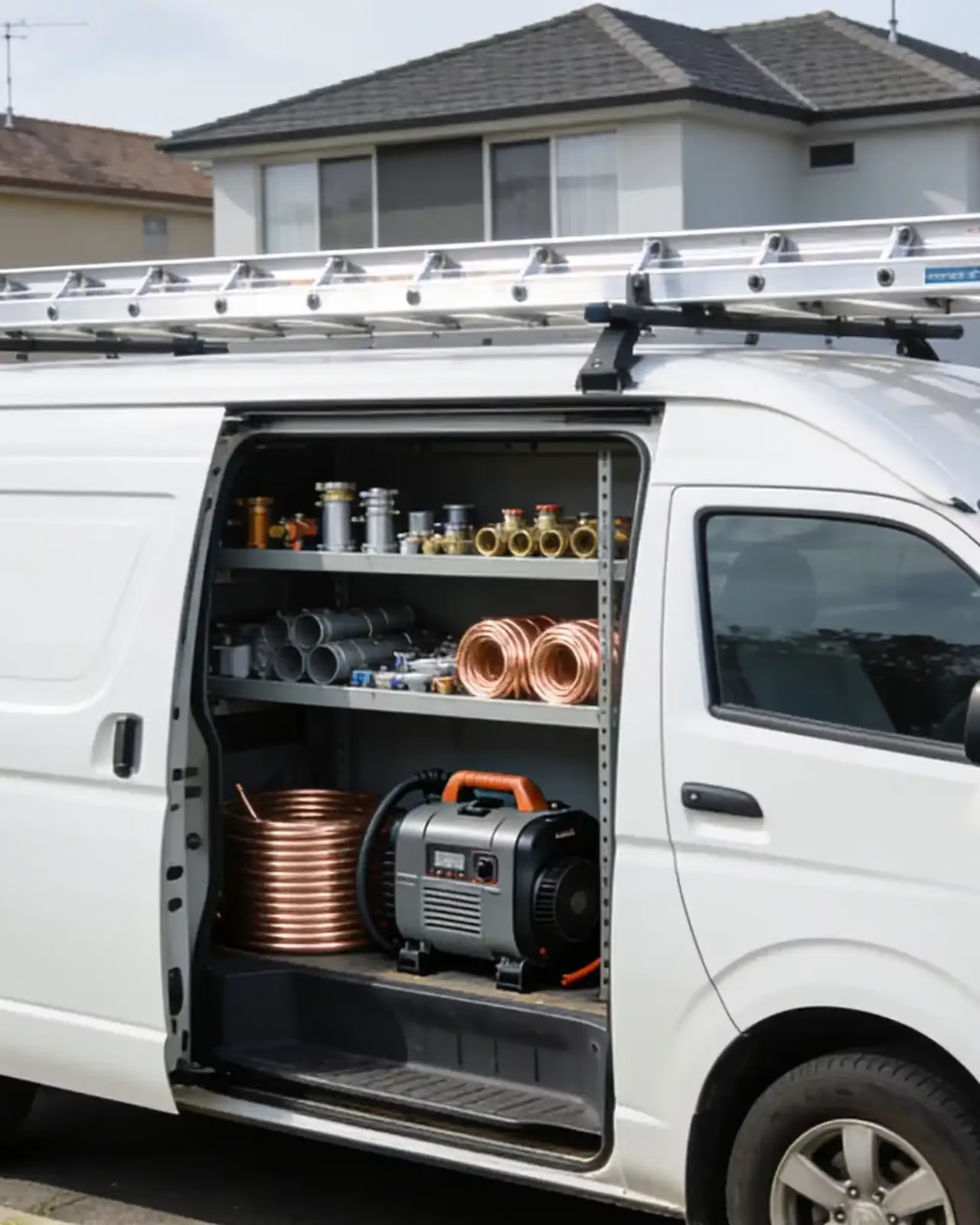
We repair split systems and ducted systems across Newcastle, Lake Macquarie, Maitland, Cessnock and Singleton, most major brands, with three ARC-licensed technicians in white vans.
Safe checks to try first
None of these need a tool or a cover taken off. Please leave the covers on: there's live wiring and refrigerant under pressure behind them.
1. The remote and the mode
Check the remote shows cool (usually a snowflake), not fan, dry or auto, and that the set temperature is below the room temperature. Swap the batteries if the screen is faint. If someone has used the timer, the unit might be waiting to switch itself on.
2. The filters
Lift the front panel of the indoor head the way your manual shows and slide out the mesh filters. If they're grey and furry, wash them in warm water, let them dry completely and refit them. A blocked filter is the most common cause of a unit that runs but barely cools, and of ice forming on the coil. Our air conditioning service page has the full step list.
3. The isolator and the breaker
Most outdoor units have an isolator switch on the wall beside them. Check it's on. Then check the switchboard: if the circuit breaker labelled for the air conditioner has tripped, reset it once. If it trips again, leave it off and ring us. A breaker that trips twice is telling you something is wrong, and resetting it a third time won't fix it.
Air conditioner not cooling
When the checks above haven't helped and the air conditioner is not cooling, these are the faults we find most often:
- Outdoor unit not running: the indoor fan blows but the outdoor fan and compressor are silent. Often a failed capacitor, a contactor or a control board fault.
- Low refrigerant: the unit runs but the air coming out is only cool, not cold. Refrigerant doesn't get used up, so a low charge means a leak, and we find and fix it before regassing. A top-up without a leak repair just leaks out again.
- Dirty coils: an outdoor coil caked with dust, leaves or salt can't get rid of heat, so the unit struggles most on the hottest afternoons, exactly when you need it.
- A unit too small for the room: if it has never coped on a hot day, the problem may be its size. We'll tell you if that's the case.
Air conditioner blowing warm air
An air conditioner blowing warm air in cooling mode usually points to the outdoor unit. If the compressor has stopped, the indoor fan just moves warm air around the room. Check the mode first, since heat and auto both blow warm. In winter, reverse cycle units in heating mode stop every so often to defrost the outdoor coil, and you may see steam off it and feel no warm air for a few minutes. That's normal. Warm air on cool mode, on a hot day, isn't.
Air conditioner noisy
Every unit makes some noise, so the question is whether it's a new one. Rattles are often a loose panel or something touching the outdoor fan. A high squeal can be a fan motor bearing. Gurgling is usually the drain or refrigerant moving and is mostly harmless, while a hiss that doesn't stop can be a leak. Clicking that repeats every few minutes can mean the unit is cycling on and off. Note when it happens and what it sounds like, as it helps us work out the fault before we arrive. If a noise is followed by a burning smell, switch the unit off at the isolator and ring us.
Air conditioner ice on pipes
Ice on the pipes or on the indoor coil means the coil is running too cold. The usual reasons are not enough air across it, from a blocked filter or a failing indoor fan, or a low refrigerant charge. Turn the unit off, put a towel under it, and let the ice melt by itself. Don't chip or scrape it, and don't aim a hair dryer at it: the fins wrap around pressurised pipes. Once it's thawed, clean the filters and try again. If the ice comes back within a day or two, it needs a technician.
Ducted air conditioning repairs
Ducted air conditioning repairs start at the controller, because most ducted systems show an error code that points at the faulty part. Common ones are a zone damper motor that has stopped, so one area won't cool; a controller that has lost contact with the unit; a blocked drain tray in the roof; and a duct that has split or dropped off its outlet, cooling the roof space instead of the room. Tell us the code when you ring.
Water dripping from the unit
Water running down the wall under an indoor head is usually a blocked drain line or a dirty coil, and it's a common call in a humid Newcastle summer. Switch the unit off and catch the drip while you wait. Our post on an air conditioner leaking water covers the causes and what you can check yourself.
Repair or replace?
We give you a straight answer. A single failed part on a unit under about ten years old is usually worth fixing. A failed compressor or a coil rotted through by salt on an older unit often isn't, because the repair costs a large share of a new system. Units that run on R22 have another problem: bulk imports of that refrigerant are banned in Australia from 1 January 2030, and after that a regas relies on reclaimed gas, which is likely to cost more. When it's close, we give you the repair price and a replacement price side by side, and our split system installation page covers what replacement involves.
The call-out fee
Our call-out fee is $140 in business hours and $220 after hours and on weekends. It covers getting to you and the first half hour of fault-finding, which is long enough to find most faults. Parts and any further labour are priced before we start, and you decide whether to go ahead. Ring (02) 5550 2240: breakdown calls are answered seven days a week.